How to Reconnect With Childhood Hobbies as a Busy Adult
A note before you read. This guide is educational self-reflection, not therapy or diagnosis. Nothing here can tell you what happened in your childhood, and nothing here concludes that anyone did anything wrong. If something feels like too much, it is completely fine to stop and come back another day — or to find real support.
If you have ever caught yourself staring at a box of watercolour paints in a stationer’s shop, holding a packet of coloured chalks, or lingering near a display of bicycle accessories, you may have felt a quiet, unexpected wave of nostalgia. Many adults reach a point in their lives where work, domestic responsibilities, and endless digital notifications leave little room for unpurposeful activity. If you are searching for how to reconnect with childhood hobbies, you are far from alone in feeling that something essential—a sense of lighthearted focus or unselfconscious absorption—has slipped out of your weekly routine.
Reconnecting with creative or physical pursuits from your younger years is rarely about trying to turn back the clock. Instead, it is a practical approach to balance. When we spend years evaluating every hour by its productivity, financial output, or utility, our capacity for open-ended curiosity can become rusty. Returning to childhood activities gives us a low-risk testing ground to practise resting, experimenting, and enjoying an activity purely for its own sake.
In the context of self-reflection, looking back at our early interests helps us tune into our natural temperament. The things that captivated us before we worried about career paths, social prestige, or efficiency often hold clues about how we regulate our nervous system and process our experiences today.
Learning how to reconnect with childhood hobbies begins with removing the pressure to produce a result. By choosing low-cost, low-stakes versions of activities you once enjoyed—without aiming for mastery or public sharing—you create a safe space to rediscover curiosity, reduce stress, and cultivate intrinsic joy in your daily adult life.
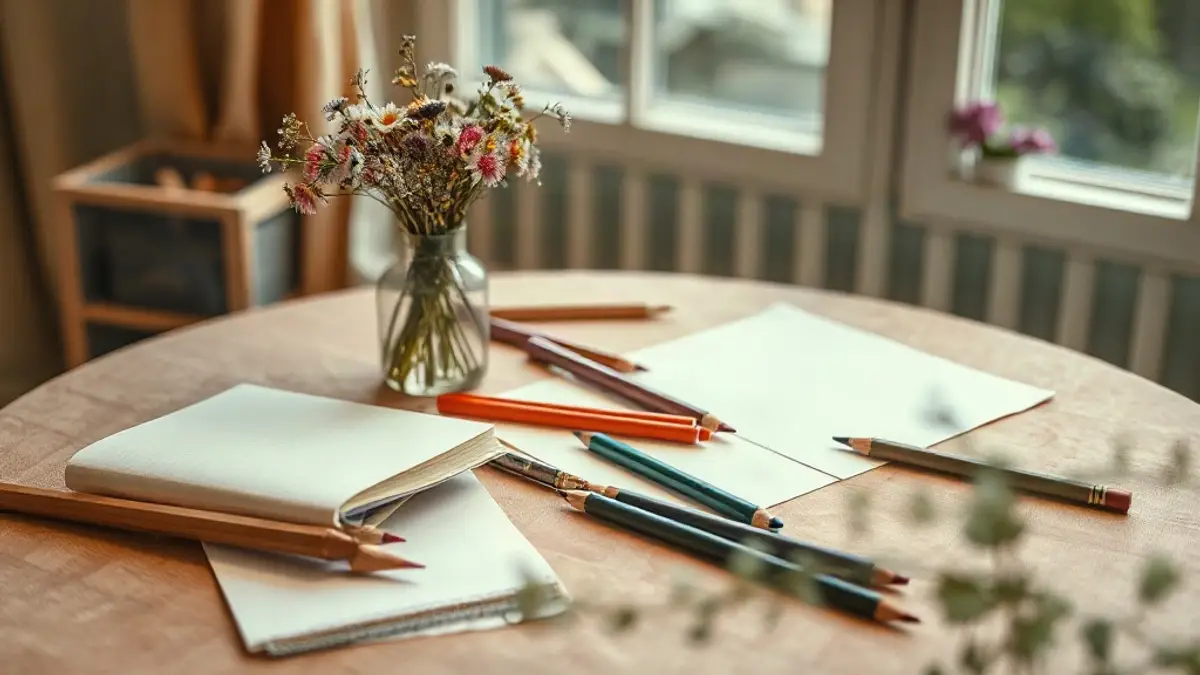
Why learning how to reconnect with childhood hobbies feels difficult as an adult
It is common to assume that picking up a forgotten interest should be simple. We might buy a sketchbook or set of running shoes, expecting an instant rush of enthusiasm, only to feel awkward, frustrated, or bored after ten minutes. Understanding why this happens is the first step towards building a gentler relationship with your leisure time.
As children, our engagement with the world is largely direct and immediate. A seven-year-old making a house out of cardboard boxes is rarely worried about whether the structure is architecturally sound or visually pleasing enough to post online. The satisfaction lives entirely inside the process of cutting, taping, and arranging.
As we mature, our brains naturally develop greater self-awareness, social evaluation, and goal-directed thinking. While these executive functions are vital for managing an adult life, they can interfere with pure play. When an adult tries to paint, build, write, or climb, an internal monitor often steps in to ask: Is this good? Am I doing this right? Is this a good use of my time?
Childhood Mode: Focus on process → Curiosity → Low self-consciousness → Spontaneous joy
Adult Mode: Focus on output → Evaluation → High self-consciousness → Resistance or strain
The shift from intrinsic joy to measurable performance
In adult life, almost everything we do is tied to an outcome. At work, tasks are measured by deadlines and key performance indicators. At home, chores are evaluated by clean spaces and cooked meals. Even our modern leisure time is frequently co-opted by metrics—tracking our steps on a smartwatch, logging the books we read on an app, or turning a baking habit into a micro-business.
When we attempt to return to things we enjoyed as a child, this habit of measurement often follows us. We might buy an acoustic guitar and immediately feel defeated because we cannot play a song smoothly within an hour. This friction occurs because our adult performance expectations clash with our beginner-level physical skill.
The myth that play must be useful
Many adults absorb a subtle cultural message that unpurposeful activity is lazy or wasteful. If an activity does not improve our health, earn income, or advance our status, we may feel a slight undertone of guilt whilst doing it.
Recognising this mental block is essential. Reconnecting with early interests requires us to explicitly grant ourselves permission to engage in “useless” pursuits. Play is not a reward you earn after completing every task on your to-do list; it is a fundamental human mechanism for balance, stress relief, and psychological flexibility.
| Aspect of Engagement | Childhood Experience | Common Adult Obstacle | Practical Re-entry Strategy |
|---|---|---|---|
| Motivation | Intrinsic curiosity and delight in sensory experience. | Extrinsic focus on utility, skill acquisition, or social proof. | Set an explicit goal to produce something bad or unfinished. |
| Time Allocation | Open-ended blocks of unscheduled time. | Tight schedules dominated by obligations and fatigue. | Limit sessions to 10–15 minute micro-bursts with no fixed end product. |
| Self-Evaluation | Minimal comparison; immersion in the immediate task. | High self-criticism and comparison to professionals online. | Work in total privacy without sharing results with anyone. |
| Resource Investment | Simple, accessible materials (paper, dirt, basic toys). | Over-buying expensive equipment before starting. | Use the cheapest, simplest entry-level materials available. |
Understanding the inner child as a framework for play
The concept of the “inner child” is a psychological metaphor, not a literal entity, a clinical diagnosis, or proof of past trauma. It serves as a helpful model for understanding the persistent, instinctive aspects of our personality—our capacity for wonder, spontaneous emotional reactions, physical sensitivity, and playfulness.
When we use this framework at The Inner Child Healing, we are simply describing the part of your psychological makeup that retains your earliest preferences, coping styles, and energetic tendencies. Adult life requires us to be structured, responsible, and practical—qualities of our metaphorical “inner adult.” However, if the adult side completely silences the child side, life can begin to feel dry, rigid, and overly serious.
Your total self
- The inner adult | The inner child
- Structure & planning | - Curiosity & play
- Responsibility | - Sensory appreciation
- Long-term focus | - Emotional honesty
- Boundaries & safety | - Spontaneity & wonder
Our early interests reflect our raw temperament before societal pressures, career choices, and adult obligations shaped our choices. One child might have loved organizing pebbles by shade and texture, pointing to an innate delight in pattern and order. Another might have spent hours inventing elaborate stories with plastic figures, revealing a natural connection to narrative and dynamic imagination.
By exploring how to rediscover what you enjoy, you are not attempting to fix a medical defect or rewrite your personal history. Instead, you are opening a gentle dialogue between your organized adult self and your open-minded child self, allowing both to contribute to your overall well-being.
Step-by-step guide: How to reconnect with childhood hobbies without pressure
If you want to introduce play back into your routine, following a structured, low-pressure pathway helps bypass the internal critic. Here is a practical framework for how to find hobbies again in a way that feels manageable and grounded.
[Phase 1: Audit] — → [Phase 2: Scale Down] — → [Phase 3: Micro-Sessions] — → [Phase 4: Protect]
Identify past themes Reduce cost & friction Commit to 10 mins/day Keep it private & free
Step 1: The low-stakes audit of things I enjoyed as a child
Start by compiling an informal inventory of your early preferences. You do not need to recall precise dates or dramatic life events; simply scan your memory for recurring themes between the ages of five and fourteen.
- What physical materials felt satisfying? (e.g., mud, water, poster paint, thread, wooden blocks, paper cuttings)
- How did you move your body? (e.g., roller-skating, climbing trees, swimming underwater, dancing in a bedroom, riding a bicycle downhill)
- What kind of environments did you seek out? (e.g., quiet corners under blankets, busy group games, outdoor gardens, library stacks)
- What systems or collections drew your focus? (e.g., stamps, football cards, seashells, organizing books by colour, drawing maps of imaginary islands)
Step 2: Decoupling activity from outcome
Once you have identified a theme—such as drawing, building, or moving—strip away any expectation of productivity. If you loved building model kits as a youth, do not start by buying a £100 intricate display model that requires twenty hours of meticulous painting. Instead, buy a simple, inexpensive craft kit or a small box of construction bricks.
Tell yourself clearly before you begin: The goal of this time is to experience the sensory process, not to create an object worth keeping.
Step 3: Starting with fifteen-minute micro-sessions
One of the largest hurdles for adults is the belief that a hobby requires hours of uninterrupted time. When life is busy with work, family, or domestic management, finding a three-hour block feels impossible, leading to total avoidance.
Instead, commit to micro-sessions. Set a timer for ten or fifteen minutes on a Tuesday evening. Spend those minutes doodling on scrap paper, strumming three chords on a ukulele, or kicking a football against a wall in the garden. When the timer rings, you are free to stop. This approach removes the psychological weight of starting and keeps the experience light.
Exploring childhood activities for adults across different sensory modes
Because our early interests were heavily rooted in sensory exploration, categorising potential pursuits by sensory mode can help you pinpoint what your nervous system might enjoy right now.
Sensory Modes of Play
- Tactile & Structural (Clay, Lego, Textiles, Gardening) Kinetic & Spatial (Skating, Swimming, Tree Climbing, Cycling) Auditory & Rhythmic (Drumming, Whistling, Listening to Albums, Chanting) Narrative & Visual (Doodling, Comic Strips, Imaginative Worldbuilding)
Tactile and structural play
If your younger self enjoyed building, sorting, or working with your hands, tactile activities offer a deeply grounding way to unwind after a day spent staring at screens.
- Air-dry clay modelling: Unlike pottery that requires a kiln, air-dry clay allows you to pinch, roll, and shape simple forms at your kitchen table.
- Building blocks and construction sets: Many adults discover that spending twenty minutes assembling a simple structure provides a soothing, step-by-step mental break.
- Papercraft and collage: Cutting up old magazines, envelopes, or coloured paper to make abstract patterns requires minimal setup and zero technical training.
- Simple fibre arts: Basic finger-knitting, embroidery on scrap cloth, or making braided friendship bracelets offers rhythmic, repetitive hand movements.
Kinetic and spatial play
Movement-based play is one of the quickest ways to shift out of analytical overthinking and ground yourself in your body.
- Roller skating or blading: Visiting a local park or outdoor court on skates brings a immediate focus on balance and physical presence.
- Bicycle riding for pleasure: Leave the heart-rate monitor and mileage tracker at home; ride slowly through a green space simply to feel the wind and motion.
- Basic gymnastics or floor movement: Spending five minutes rolling on a soft mat, doing cartwheels on grass, or hanging from a park climbing frame can release physical tension.
- Hula-hooping or skipping: Simple, rhythmic physical challenges that require coordination without demanding complex athletic training.
Auditory, narrative, and visual play
If your early inclination was towards stories, sounds, or visual imagery, lean into low-barrier creative activities.
- Doodling with cheap materials: Use basic wax crayons or felt-tip pens on newsprint paper to remove the anxiety of ruining expensive art supplies.
- Making playlists or mixtapes: Curating music tracks around specific moods, themes, or nostalgic eras mirrors the simple delight of compiling cassette tapes.
- Writing short, absurd fiction: Draft a three-paragraph story that makes no attempt to be literary or published, focusing purely on playful scenarios.
- Reading illustrated books or comics: Revisiting graphic novels, comics, or illustrated natural history books provides visual and narrative engagement without heavy mental strain.
For more inspiration on practical ways to bring lightheartedness into your routine, explore our guide on inner child play activities.
How to rediscover what you enjoy when your memory feels blank
It is entirely normal to look back at your younger years and draw a total blank. Many people find that when they ask themselves what they enjoyed as a child, no vivid memories or clear passions pop up.
This absence of memory does not mean you lacked interests or that something is wrong with you. Human memory is selective, and long periods of routine, fatigue, or stress can temporarily mute our recollection of past pleasures. Furthermore, childhood experiences vary widely; not everyone spent their early years with abundant free time, resources, or support for personal interests. Personal temperament, family dynamics, cultural environment, and economic circumstances all influence how much space we had for play.
If memory feels blank
- Look at current non-work inclinations (e.g., what videos do you watch?).
- Notice sensory textures you are drawn to in daily life.
- Test small, low-cost activities without needing a memory to justify them.
If direct memory yields very little, use indirect clues from your present adult life to guide you:
- Notice your low-energy browsing habits: What topics, crafts, or physical activities do you naturally pause to watch on videos or in public parks when you are exhausted?
- Observe your environmental preferences: Are you drawn to bright colours, quiet wooded spaces, neat geometric arrangements, or loud, energetic environments?
- Experiment with fundamental elements: Rather than hunting for a specific past hobby, test fundamental modes of engagement—water, paint, movement, sound, building—to see what feels satisfying today.
Overcoming the internal critic: Perfectionism and performance anxiety
The moment an adult picks up a paintbrush, a musical instrument, or a sporting item, a harsh voice often speaks up. This looks terrible. You’re too old for this. You aren’t talented enough to bother.
This internal critic is a protective mechanism. Its underlying goal is often to protect us from vulnerability, shame, or the discomfort of being a novice. In childhood, learning involved constant trial and error. As adults, we become accustomed to feeling competent in our chosen fields, making the awkwardness of beginner status feel surprisingly uncomfortable.
To protect your play space, you must active practice what self-compassion researchers describe as non-judgmental awareness. Pioneer researcher Dr Kristin Neff emphasizes that treating oneself with kindness during moments of frustration or inadequacy helps reduce the fear of failure, making room for curiosity and learning. You can learn more about self-compassion practices at self-compassion.org.
Internal Critic: “This painting looks childish and messy.”
- ↓ Reframing: “Of course it does. The goal is to feel the paint on paper, not to hang it in a gallery.”
| Internal Critic Thought | What It Might Be Protecting | Compassionate Reparenting Response |
|---|---|---|
| ”You are wasting valuable time that should be spent working or cleaning.” | Protects against fear of falling behind or being judged as lazy. | ”Rest and play are basic human needs that support my overall health. Ten minutes of play is safe and allowed." |
| "This looks messy and ugly; you have no natural talent for this.” | Protects against the vulnerability of making mistakes or feeling inadequate. | ”I am doing this for the feeling of the activity, not for the final appearance. Bad art is completely welcome here." |
| "You are a grown adult; standing in a park kicking a ball looks ridiculous.” | Protects against social awkwardness or fear of public judgment. | ”Moving my body playfully is a normal, healthy activity. Other people’s opinions do not define my leisure time." |
| "You spent money on these supplies and now you’re not even sticking with it.” | Protects against financial guilt and fear of wastefulness. | ”It is okay to experiment with small things and change my mind. Trying an activity for a week still has value.” |
How to reconnect with childhood hobbies when time and energy are limited
A major barrier to building sustainable leisure habits is the assumption that hobbies require huge investments of energy and time. After a demanding workday or a full evening of parenting, the thought of setting up an elaborate art station or traveling to a sports venue can feel overwhelming.
The key to long-term integration is reducing operational friction. Make the transition from adult responsibilities to simple play as effortless as possible.
Creating a low-friction “play kit”
Keep your chosen activity visible and immediately accessible. If you want to doodle, keep a small, inexpensive pad and a single smooth pen on your side table—not tucked away in an attic box. If you want to try clay modelling, store a single pack of air-dry clay and one plastic tool in a small basket near your favourite armchair.
By keeping the setup and cleanup time under thirty seconds, you lower the mental threshold required to start.
Leveraging the “Tuesday evening rule”
Instead of reserving play for long weekends or holidays, anchor brief playful moments into ordinary, mundane weekdays. Consider a typical Tuesday evening: after finishing dinner and clearing the kitchen, instead of immediately switching on the television or scrolling through news feeds, dedicate just twelve minutes to your chosen activity.
For further ideas on how to weave lightheartedness into demanding adult schedules, read our article on how to reconnect with joy.
When rediscovering old interests brings up unexpected emotions
Stepping out of your usual routine to engage in simple, childlike play can occasionally trigger unexpected feelings. You might feel a pang of sadness, grief for lost years, or frustration that you abandoned these activities for so long.
SENSORY ACTIVITY (e.g., painting, skating)
- Surfacing emotions (e.g., nostalgia, grief for lost time, frustration) Gentle response options:
- Acknowledge without judgment (“It makes sense I feel nostalgic.”) Scale back the intensity (take a brief break) Seek professional support if distress feels overwhelming
These emotional responses are normal when we slow down and reconnect with unfulfilled desires. Acknowledge these emotions gently without turning them into a problem that needs fixing. You might say to yourself: It makes total sense that I feel a bit nostalgic or sad right now. I am giving myself space for something I missed.
If exploring your past brings up patterns of emotional distress or persistent overwhelm that feel difficult to manage alone, remember that self-reflection articles are not a substitute for clinical support. Reaching out to a qualified therapist or a healthcare professional is a positive, proactive step. Organizations like Mind offer reliable guidance on finding professional mental health resources in the UK.
If you are curious about recognizing emotional patterns in your daily life, you may also find our overview of the signs of a wounded inner child helpful as an educational self-reflection tool.
Sustaining the practice: Keeping play free from optimization
Once you successfully reintroduce a childhood interest into your routine, a final challenge often appears: the urge to optimize it.
You might find yourself thinking about starting an Instagram account to showcase your sketches, entering a local competition, or turning your baking into a weekend market stall. While there is nothing inherently wrong with sharing or monetising skills, doing so fundamental alters the psychological nature of the activity. The moment an activity becomes tied to external approval, financial return, or public audience, it ceases to function as pure play and becomes work.
To keep your reconnected hobbies restorative:
- Keep at least one activity entirely private. Never post photos, videos, or descriptions of it online.
- Refuse to track metrics. Do not log times, scores, counts, or outputs unless it genuinely adds to your personal fun.
- Allow yourself to quit or switch. If a hobby loses its charm after three weeks, put it down without guilt and try another. The goal is the practice of curious engagement, not lifelong dedication to a single task.
Taking a practical, lightweight approach ensures that your journey with The Inner Child Healing remains a grounded, enriching addition to your life.
Frequently asked questions
Is it normal to feel silly when trying childhood activities for adults?
Yes, feeling silly or self-conscious is a completely normal response when adults try simple, play-focused activities. Because our society places high value on expertise, efficiency, and productivity, engaging in unpurposeful play can initially feel awkward. Acknowledging the awkwardness with a lighthearted attitude helps it pass quickly.
What if I cannot remember anything I enjoyed as a child?
If your direct memories feel blank, focus on basic sensory modes rather than specific past events. Test fundamental activities like working with clay, scribbling with bright pens, moving rhythmically, or spending time in nature. Your present-day preferences for textures, sounds, and environments can guide you just as effectively as childhood memories.
How do I stop myself from turning my new hobby into a business?
To protect your play space, make a firm rule to keep at least one hobby entirely private. Avoid sharing pictures of your progress on social media, selling your items, or tracking performance metrics. Explicitly reminding yourself that the goal is the internal experience rather than an external product helps preserve its restorative nature.
How much time should I spend on a childhood hobby each week?
Start with as little as ten or fifteen minutes once or twice a week. Short, consistent micro-sessions are far more effective for building a low-pressure habit than waiting for large, multi-hour blocks of time. You can always extend a session if you are enjoying yourself, but keeping the commitment small removes the friction of starting.
What is the difference between inner child work and child psychology?
“Inner child” is an educational and self-reflective metaphor used by adults to understand enduring emotional patterns, emotional regulation, and personal needs for play and rest. Child psychology, by contrast, is a formal scientific and clinical discipline focused on the developmental processes of actual children.
Can reconnecting with childhood hobbies replace therapy?
No. While returning to creative or physical hobbies is a practical tool for stress relief, balance, and self-discovery, it is not a therapeutic treatment or clinical cure for mental health conditions. If you are dealing with severe distress, persistent anxiety, or depression, seeking guidance from a qualified mental health professional is the right step.
Taking your next gentle step
Learning how to bring play back into your adult life is a gradual, ongoing process of gentle experimentation. You do not need to overhaul your daily schedule or spend significant money to begin—a five-minute doodle on scrap paper or a brief walk in a local park is more than enough to start restoring balance.
If you would like to explore your personal patterns, emotional responses, and capacity for play in greater detail, try our free Inner Child Check. This simple, 8-question self-reflection quiz helps you identify where you might benefit from more rest, creativity, or clearer personal boundaries.
For those who want a structured, self-paced framework to continue this work, our comprehensive Inner Child Map is available for a one-off payment of $9, providing practical exercises to help you build a more balanced, compassionate relationship with yourself.
The Inner Child Healing provides educational self-reflection tools and is not a substitute for mental-health diagnosis, treatment, psychotherapy, or crisis care.